
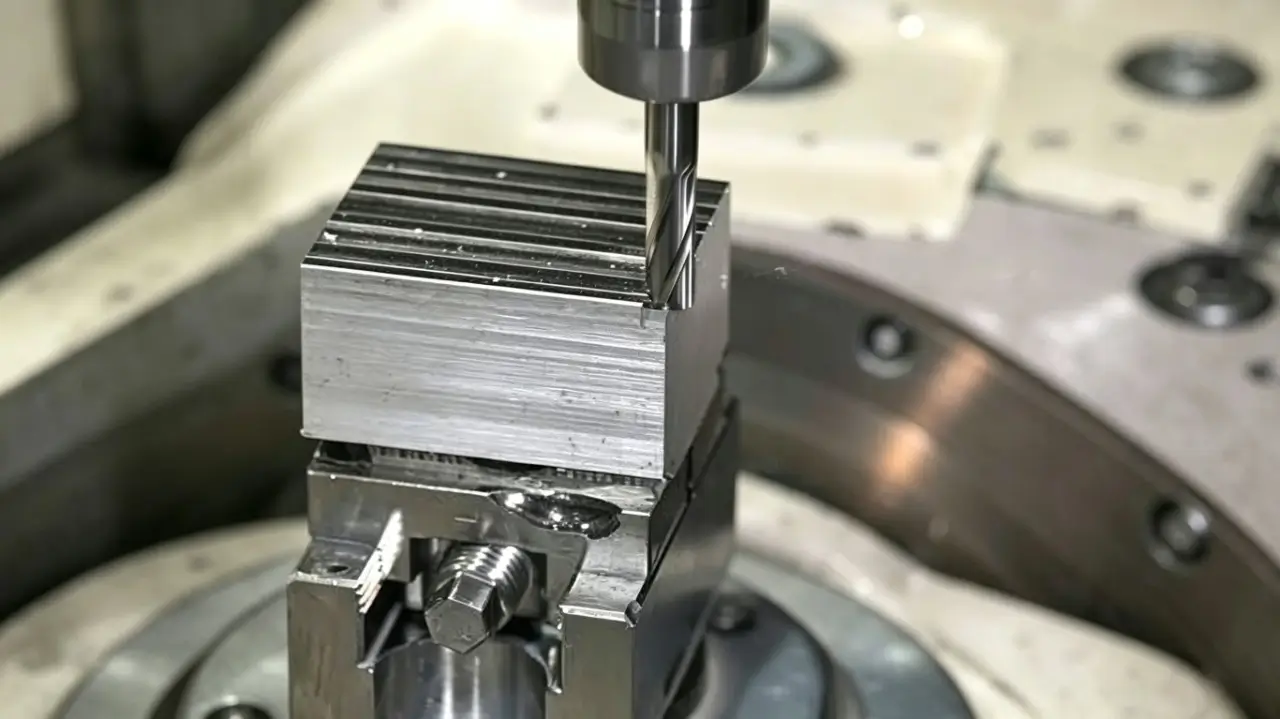
For engineers and purchasing professionals, understanding the factors that affect aluminum CNC machining costs is essential when selecting materials, optimizing part designs, and planning production budgets. This guide explains the key cost drivers behind aluminum CNC machining, compares common aluminum alloys, and shares practical methods to reduce manufacturing costs without compromising part quality.
What Determines Aluminum CNC Machining Cost?
Custom Aluminum CNC Machined Parts costs are influenced by a combination of material, manufacturing, and quality requirements. While aluminum is generally considered one of the most machinable engineering materials, the final cost of a machined part can vary significantly depending on its design complexity, dimensional requirements, production volume, and post-processing needs. Understanding these factors helps engineers make more manufacturable designs and enables purchasing teams to evaluate quotations more effectively.
Material Cost of Aluminum Alloys
Material Cost of Aluminum AlloysMaterial selection is one of the first factors affecting the overall cost of a CNC-machined aluminum part. Different aluminum grades vary in raw material price, mechanical properties, availability, and machinability, all of which influence the final manufacturing cost.
For most general-purpose applications, 6061 aluminum is often the most cost-effective choice due to its excellent machinability and widespread availability. Higher-strength alloys such as 7075 and 2024 typically carry higher material costs and are generally specified only when additional mechanical performance is required.
Part Geometry and Design Complexity
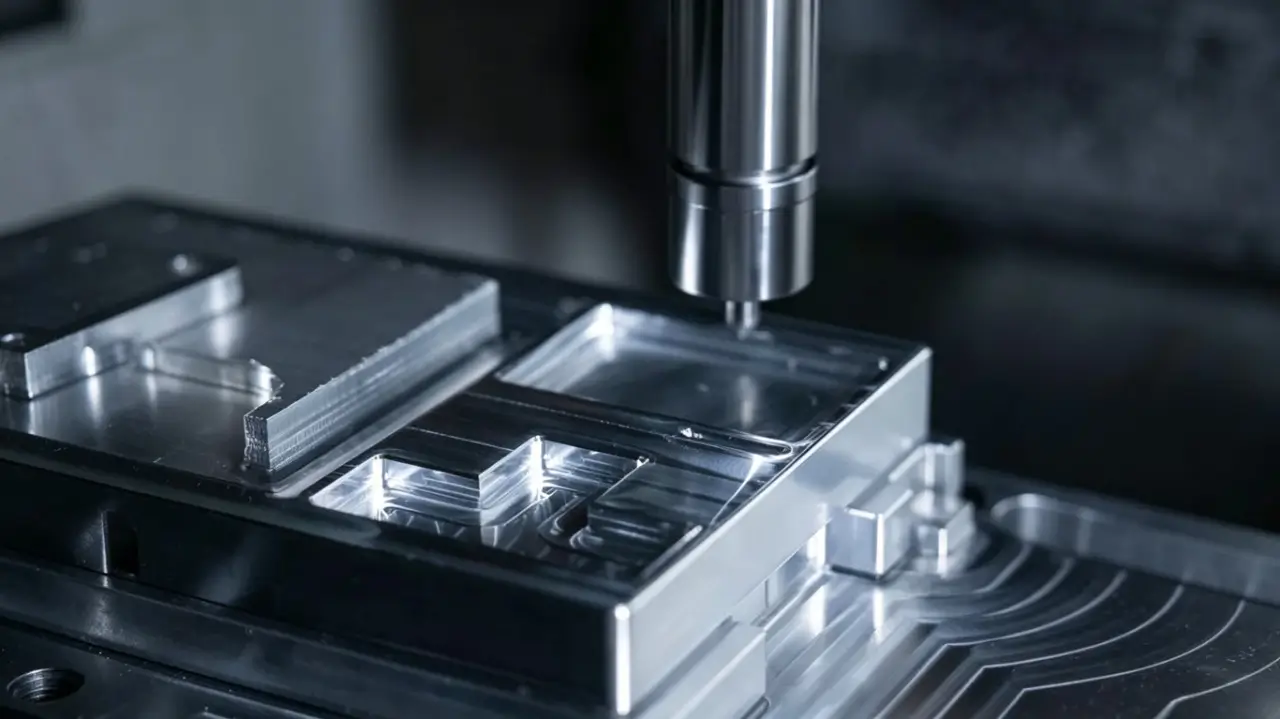
Part geometry has a direct influence on machining strategy, cycle time, and tooling requirements. Features such as deep cavities, thin walls, narrow slots, and complex internal profiles are generally more difficult to machine than simple planar surfaces. These features often require additional toolpaths, reduced cutting parameters, or specialized tooling to maintain dimensional accuracy and surface quality.
Parts that require machining on multiple faces can further increase manufacturing costs due to additional setup and inspection requirements. Even when two components are made from the same aluminum alloy and have similar overall dimensions, differences in geometry can result in substantially different machining times. For this reason, simplifying unnecessary features and following Design for Manufacturability (DFM) principles are among the most effective ways to improve machining efficiency and reduce production costs.
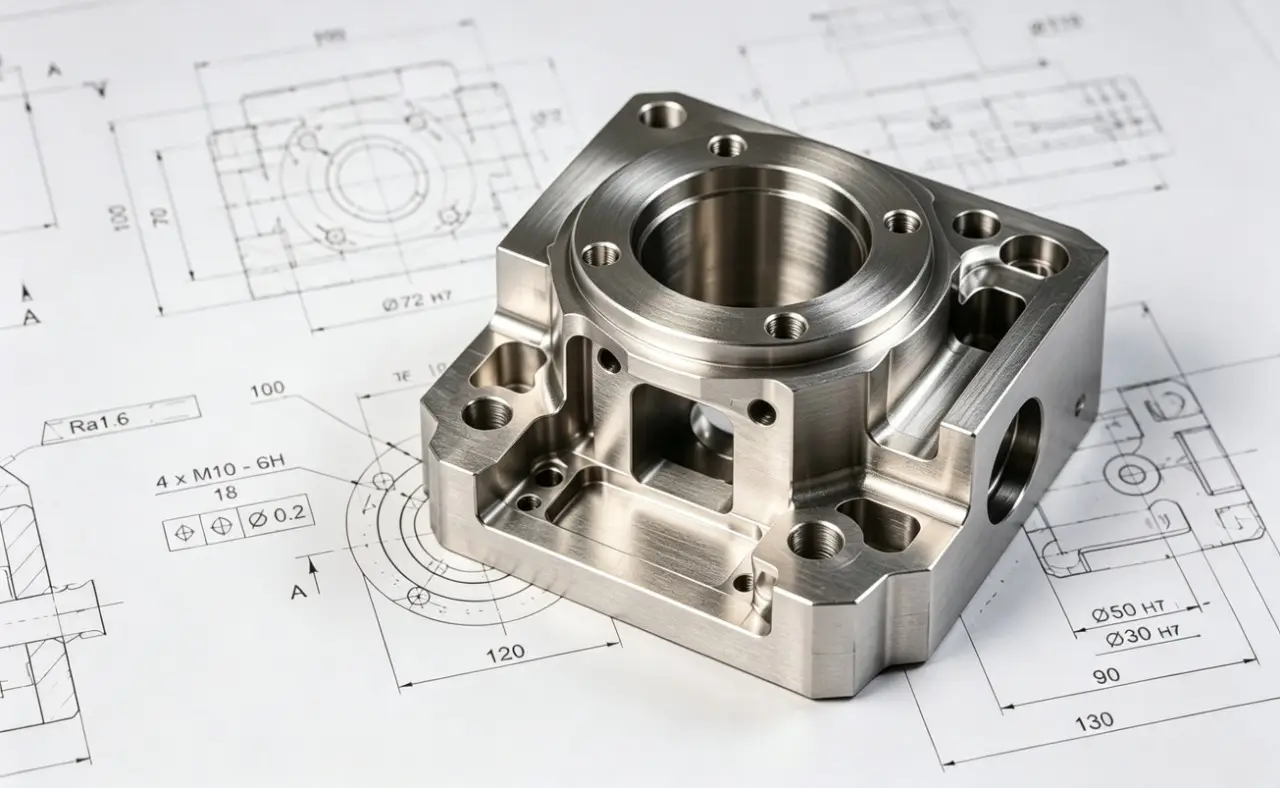
Tolerance Requirements
Tolerance requirements directly affect machining efficiency and quality control procedures. Standard CNC machining tolerances can typically be achieved during normal production, but tighter tolerances often require additional machining passes, slower cutting parameters, and more frequent dimensional verification.
As tolerance requirements become more demanding, process control and inspection requirements also increase. Applying tight tolerances only to critical functional features is a common engineering practice that helps balance manufacturing cost and part performance.
Production Volume
Production volume plays an important role in determining the cost per part. Regardless of order quantity, every CNC machining project requires programming, machine setup, tooling preparation, and first-article inspection before production can begin.
As quantities increase, these fixed manufacturing costs are distributed across a larger number of components, resulting in a lower unit cost. This is why production runs are typically more cost-effective than prototype or one-off machining projects.
Surface Finishing and Secondary Operations
Many aluminum parts require secondary processes after machining to improve appearance, corrosion resistance, wear resistance, or product identification. Common finishing options include anodizing, bead blasting, powder coating, polishing, and laser marking.
Although these operations can enhance part performance and aesthetics, they add additional processing time, labor, and quality control requirements. Depending on the finishing specification, secondary operations can represent a significant portion of the total manufacturing cost.
Aluminum Alloy Selection and Cost Comparison
·Although aluminum is often grouped as a single material category, different alloys can have a noticeable impact on both material costs and machining efficiency. Factors such as alloy composition, mechanical properties, availability, and machinability all influence the final manufacturing cost. Selecting an alloy that matches the functional requirements of the part is often one of the simplest ways to control overall production expenses.
6061 Aluminum
6061 is the most widely used aluminum alloy for CNC machining and is often considered the benchmark for cost-performance balance. It offers good strength, corrosion resistance, weldability, and excellent machinability, making it suitable for a broad range of industrial applications.
Its widespread availability and stable supply chain help keep material costs relatively low. For many structural, mechanical, and general engineering components, 6061 provides the required performance without introducing unnecessary manufacturing costs.
7075 Aluminum
7075 aluminum is commonly used in aerospace, defense, and high-performance engineering applications where strength is a primary requirement. Its mechanical properties are significantly higher than those of 6061, particularly in terms of tensile strength and fatigue resistance.
However, these performance advantages come at a higher material cost. When the application does not require the additional strength offered by 7075, selecting it may increase manufacturing expenses without providing meaningful benefits.
2024 Aluminum
2024 aluminum is known for its high strength and excellent fatigue performance, making it a common material for aircraft structures and load-bearing components.
Compared with 6061, it is generally more expensive and offers lower corrosion resistance, which may require additional surface protection in certain environments. Material selection should therefore consider both mechanical performance and lifecycle requirements.
5052 Aluminum
5052 aluminum is widely used for brackets, enclosures, sheet metal components, and applications that require excellent corrosion resistance.
While it performs exceptionally well in forming and fabrication processes, its machining characteristics are generally less favorable than those of 6061. Depending on part geometry and production requirements, this can result in slightly longer machining times and higher manufacturing costs.
Selecting the Right Alloy for Cost Efficiency
The most expensive alloy is not always the best choice, and the lowest-cost alloy is not always the most economical solution. Material selection should be based on the actual performance requirements of the application, including strength, corrosion resistance, weight, and operating environment.
For many CNC-machined components, 6061 remains the preferred choice because it offers an excellent balance of machinability, mechanical performance, and material cost. Higher-performance alloys should be selected only when their specific properties are necessary for the intended application.
Key Factors That Increase Aluminum Machining Cost
Not all machining costs are driven by material selection. In many cases, the design and manufacturing requirements of a part have a greater impact on the final quotation than the aluminum alloy itself. Certain features and specifications can significantly increase machining time, inspection requirements, and overall production complexity.
Deep Cavities and High Aspect Ratio Features
Deep cavities are more challenging to machine because they often require long-reach cutting tools. As tool length increases, rigidity decreases, making it necessary to reduce cutting speeds and material removal rates to maintain stability and dimensional accuracy.
High aspect ratio features can also make chip evacuation more difficult and increase the likelihood of tool deflection. These factors typically result in longer cycle times and higher machining costs.
Thin Walls
Thin-walled structures are commonly used to reduce weight, but they can be difficult to machine without distortion. Cutting forces generated during machining may cause the material to deflect, especially when wall thickness becomes too small relative to the part size.
To minimize deformation, manufacturers often use lighter cutting parameters and additional finishing passes, both of which increase machining time and production costs.
Tight Tolerances
Tighter tolerances generally require greater process control throughout manufacturing. Achieving high dimensional accuracy may involve slower machining parameters, additional in-process measurements, and more comprehensive inspection procedures.
When tight tolerances are applied to non-critical features, they can increase production costs without providing any functional benefit. Limiting precision requirements to critical dimensions is a common cost-reduction strategy.
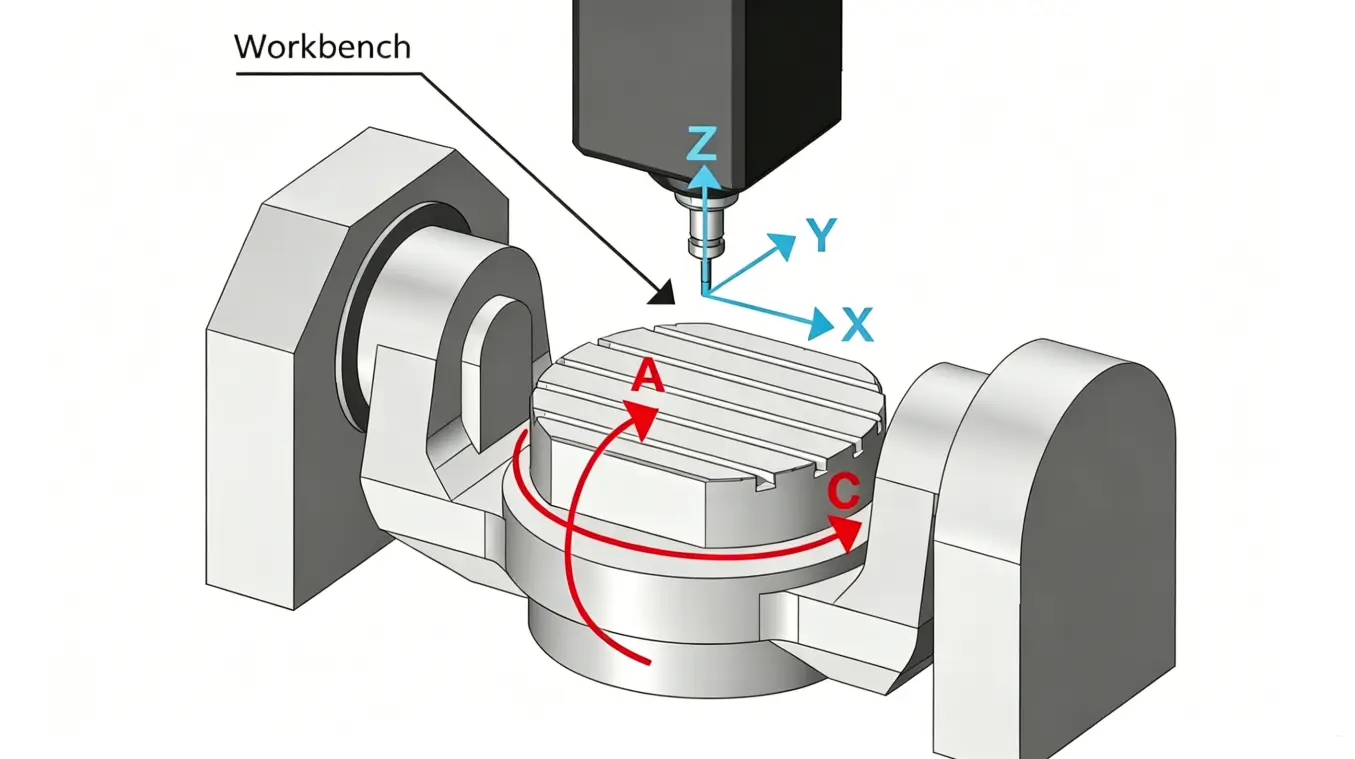
Multiple Setups and Machining Surfaces
Parts that require machining on several faces typically involve additional setup operations. Each setup requires fixturing, alignment, verification, and inspection before machining can continue.
As the number of setups increases, so does the overall production time. Designs that can be completed in fewer setups are generally more efficient and less expensive to manufacture.
Extensive Surface Finishing Requirements
Surface treatments such as anodizing, polishing, bead blasting, and powder coating can improve corrosion resistance, appearance, and wear performance. However, each additional finishing process introduces extra labor, processing time, and quality control requirements.
For cosmetic components, finishing costs can sometimes represent a significant portion of the total manufacturing budget. Selecting only the finishes necessary for functional or aesthetic requirements can help control overall costs.
Aluminum CNC Prototype vs Production Machining Cost
Production quantity has a direct impact on the cost structure of CNC-machined aluminum parts. Although the material, geometry, and tolerance requirements may remain unchanged, the unit price can vary significantly depending on whether a part is produced as a prototype, a low-volume batch, or a production run.
The primary reason is that programming, machine setup, tooling preparation, and inspection costs must be completed regardless of order quantity. As production volume increases, these fixed costs are distributed across more parts, resulting in a lower unit cost.
Prototype Aluminum CNC Machining (1–10 Parts)
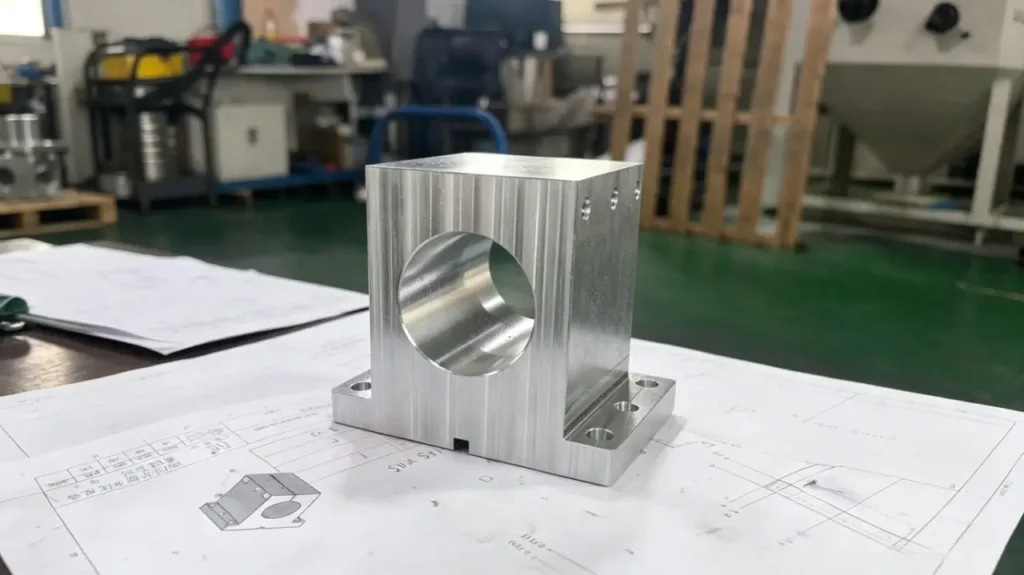
Prototype machining is primarily used for design validation, functional testing, and engineering evaluation. Since setup and programming costs are allocated across only a few parts, prototype orders typically have the highest unit cost.
Engineering changes are also more common during the prototyping stage. Design revisions, dimensional adjustments, and process optimization can introduce additional setup and programming work, further increasing manufacturing costs.
Low-Volume Aluminum CNC Machining (10–500 Parts)
Low-volume production bridges the gap between prototyping and full-scale manufacturing. Once machining programs and setup procedures have been established, fixed costs can be distributed across a larger quantity of components.
This production range is often used for pilot production, custom equipment, replacement parts, and market validation projects where flexibility remains important but cost efficiency becomes a greater consideration.
Production Aluminum CNC Machining (500+ Parts)
Production machining focuses on maximizing manufacturing efficiency and reducing cost per part. At higher quantities, manufacturers can optimize tooling, fixturing, machining strategies, and inspection processes to improve productivity and consistency.
Because setup and engineering costs represent a much smaller percentage of the overall project cost, production runs typically achieve the lowest unit price and the most efficient cost structure.
How to Reduce Aluminum CNC Machining Cost
Reducing aluminum CNC machining costs is often less about finding the lowest supplier price and more about improving part manufacturability. Many cost-saving opportunities can be identified during the design stage, where decisions related to material selection, geometry, tolerances, and finishing requirements have the greatest impact on manufacturing efficiency.
By applying Design for Manufacturability (DFM) principles early in the product development process, engineers can often achieve substantial cost reductions without affecting part performance or functionality.
Select the Appropriate Aluminum Alloy
Material selection should be based on actual application requirements rather than choosing the highest-strength alloy available. While alloys such as 7075 and 2024 provide superior mechanical properties, they are not necessary for every project.
For many structural and general engineering applications, 6061 aluminum offers an excellent balance of strength, corrosion resistance, machinability, and cost. Choosing the appropriate alloy can help avoid unnecessary material expenses while maintaining the required performance.
Apply Tight Tolerances Only Where Necessary
Tolerance requirements should be assigned based on functional needs rather than applying high-precision tolerances across an entire part.
Restricting tight tolerances to critical mating surfaces, bearing locations, or assembly features allows manufacturers to use more efficient machining parameters on non-critical dimensions, reducing both machining and inspection costs.
Standardize Holes and Threads
Using standard drill diameters, thread sizes, and common feature dimensions simplifies machining operations and reduces tooling complexity.
Standardized features can also improve manufacturing consistency, reduce setup time, and make future production runs more efficient.
Minimize Secondary Operations
Surface treatments and post-processing operations should be specified only when required by the application. Processes such as anodizing, polishing, bead blasting, engraving, and specialty coatings add labor, lead time, and manufacturing cost.
Evaluating whether a finish is functionally necessary can help reduce overall production expenses while maintaining product requirements.
Increase Order Quantities When Possible
For repeat production projects, larger batch sizes often provide better manufacturing efficiency. Programming, setup, tooling preparation, and inspection costs can be distributed across more parts, lowering the overall cost per unit.
When demand is predictable, consolidating multiple small orders into a larger production run can often generate meaningful cost savings.
Conclusion
Aluminum CNC machining costs are influenced by far more than just the price of raw material. Factors such as alloy selection, part geometry, tolerance requirements, surface finishing, and production volume all contribute to the final manufacturing cost. Even two parts made from the same aluminum alloy can have significantly different prices due to differences in machining complexity and production requirements.
For engineers and purchasing professionals, controlling costs begins with making informed decisions during the design stage. Selecting the appropriate material, simplifying unnecessary features, applying realistic tolerances, and planning production quantities effectively can improve manufacturability while reducing overall project costs. Understanding how these factors affect pricing helps ensure a better balance between performance, quality, and budget.
FAQ
A:There is no fixed price for aluminum CNC machining because costs depend on multiple factors, including material grade, part geometry, machining time, tolerance requirements, surface finishing, and order quantity. A simple component may cost only a few dollars to machine, while complex precision parts can cost substantially more.
A:For most applications, 6061 aluminum is considered the most cost-effective alloy. It offers an excellent combination of machinability, strength, corrosion resistance, and availability, making it the preferred choice for a wide range of CNC-machined components.
A:Yes. 7075 aluminum generally costs more than 6061 due to its higher strength and specialized applications. It is commonly used in aerospace, defense, and high-performance engineering components where additional mechanical properties justify the increased material cost.
A:Most manufacturers require a 2D drawing or 3D CAD file, material specification, quantity, tolerance requirements, surface finish requirements, and any special processing instructions. Providing complete engineering information helps suppliers generate accurate quotations and identify potential cost-saving opportunities.