
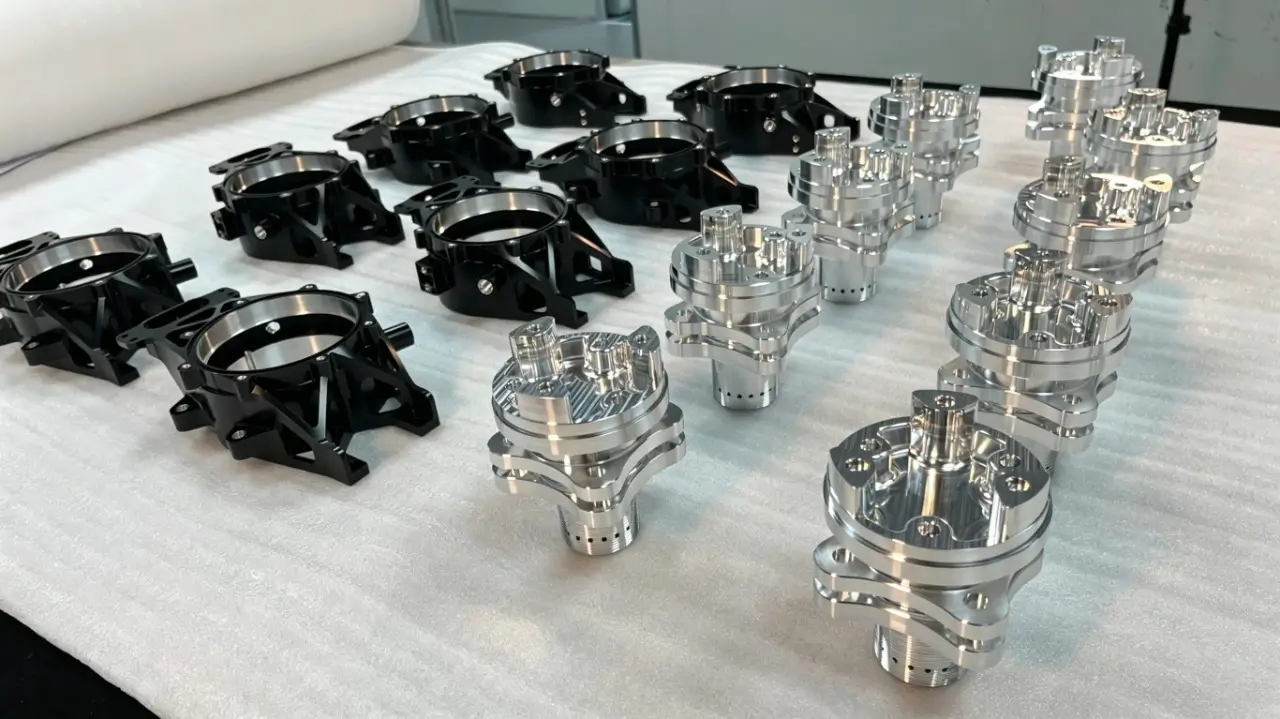
This guide delivers a comprehensive technical breakdown of CNC machining with 6061-T6 aluminum, spanning core mechanical properties, compatible precision manufacturing processes, DFM optimization guidelines, surface finish specifications, grade performance comparisons and real-world industrial applications. It provides actionable reference for design engineers validating material suitability and tolerance feasibility, as well as for procurement teams assessing manufacturability, production lead times and total project economics.
What Is 6061-T6 Aluminum?
6061-T6 is a precipitation-hardened 6000-series wrought aluminum alloy, the most widely specified grade for precision CNC machined components. Its standard composition contains 0.4–0.8% silicon, 0.8–1.2% magnesium and 0.15–0.4% copper, with trace chromium additions to refine grain structure and improve stress corrosion resistance. This balanced chemistry delivers a reliable combination of mechanical strength, machinability and corrosion performance.
The T6 designation refers to a standardized three-step thermal treatment: solution heat treatment, rapid quenching and controlled artificial aging. This process precipitates uniform strengthening particles throughout the material, delivering significantly higher strength and hardness than annealed or naturally aged 6061 variants. Produced to ASTM B221 (industrial) and AMS 4027 (aerospace) standards, it ensures consistent material properties and batch-to-batch repeatability for CNC manufacturing.
Key Mechanical Properties for CNC Machining
The mechanical properties of 6061-T6 aluminum underpin its dominant role in precision CNC machining, with direct implications for part design validation, production efficiency and cost control. These parameters define both in-service performance and manufacturing behavior for engineers and procurement teams alike.
Tensile and Yield Strength
Standard 6061-T6 delivers a minimum ultimate tensile strength of 310 MPa (45 ksi) and yield strength of 276 MPa (40 ksi), outperforming non-heat-treated aluminum alloys. This enables load-bearing brackets, frames and structural fittings to resist permanent deformation, while reducing material deflection during clamping and cutting to support tight, consistent tolerances on complex features.
Hardness and Machinability Balance
At a nominal 95 HB Brinell hardness, 6061-T6 strikes an optimal balance for CNC processing. It resists surface scuffing and burr formation while remaining gentle on standard carbide tooling, supporting high feed rates, shorter cycle times, lower tooling costs and reduced secondary deburring work across prototype and mass production.
Dimensional Stability and Tolerance Consistency
The standardized T6 heat treatment creates a uniform microstructure with controlled residual stress, minimizing post-machining warpage and spring-back. 6061-T6 parts reliably retain their machined geometry, enabling consistent compliance with ISO 2768-m tolerance standards across batches and eliminating the need for extensive rework or straightening.
Corrosion Resistance and Finishing Compatibility
6061-T6 provides reliable general corrosion resistance for most indoor and sheltered outdoor industrial applications. It is also fully compatible with common secondary finishes including anodizing, bead blasting, powder coating and chromate conversion coating, giving teams flexibility to match functional and cosmetic requirements to project budgets.
Why 6061-T6 Is Ideal for CNC Machining
6061-T6 aluminum stands out as the preferred alloy for precision CNC machining due to its unique combination of processing performance, dimensional reliability and overall production value. It delivers predictable, repeatable results across both high-mix prototype and high-volume production environments, avoiding many of the manufacturing challenges associated with softer or harder aluminum grades.
Excellent Machinability and Chip Control
The alloy’s uniform T6 tempered microstructure produces consistent, breakable chips during high-speed milling, turning and drilling operations. This prevents long, stringy chip buildup that can mar part surfaces, clog tool paths and cause unexpected machine downtime. Clean chip evacuation also supports higher feed rates and deeper cuts, directly boosting production throughput without sacrificing surface finish quality.
High Precision and Tight Tolerance Capability
Thanks to its balanced strength and controlled residual stress, 6061-T6 maintains geometric stability throughout fixturing, cutting and de-stressing stages. It reliably achieves ISO 2768-m general tolerances and can hold IT7–IT9 precision tolerances on critical features with proper fixturing and tooling. This consistency reduces scrap rates and simplifies assembly fit verification for engineering teams.
Low Tool Wear and Cost Efficiency
Compared with high-strength alloys such as 7075-T6, 6061-T6 places far less abrasive stress on cutting tools. Standard carbide end mills and inserts deliver long service life even at elevated cutting speeds, lowering per-part tooling costs and reducing changeover downtime. Combined with widespread material availability and stable pricing, this makes it a highly cost-effective choice for ongoing production programs.
Broad Compatibility with Secondary Operations
Beyond primary CNC machining, 6061-T6 integrates seamlessly with common downstream manufacturing steps including tapping, reaming, deburring and threaded insert installation. It also responds consistently to all standard surface finishing processes, eliminating the need for special process adjustments that add cost and extend production lead times.
Common CNC Machining Processes for 6061-T6
6061-T6 aluminum is compatible with all standard precision CNC manufacturing processes, and its uniform material properties ensure consistent performance across each production step. Below are the most widely used machining methods for this alloy, along with key performance considerations for engineering and production teams.
CNC Milling
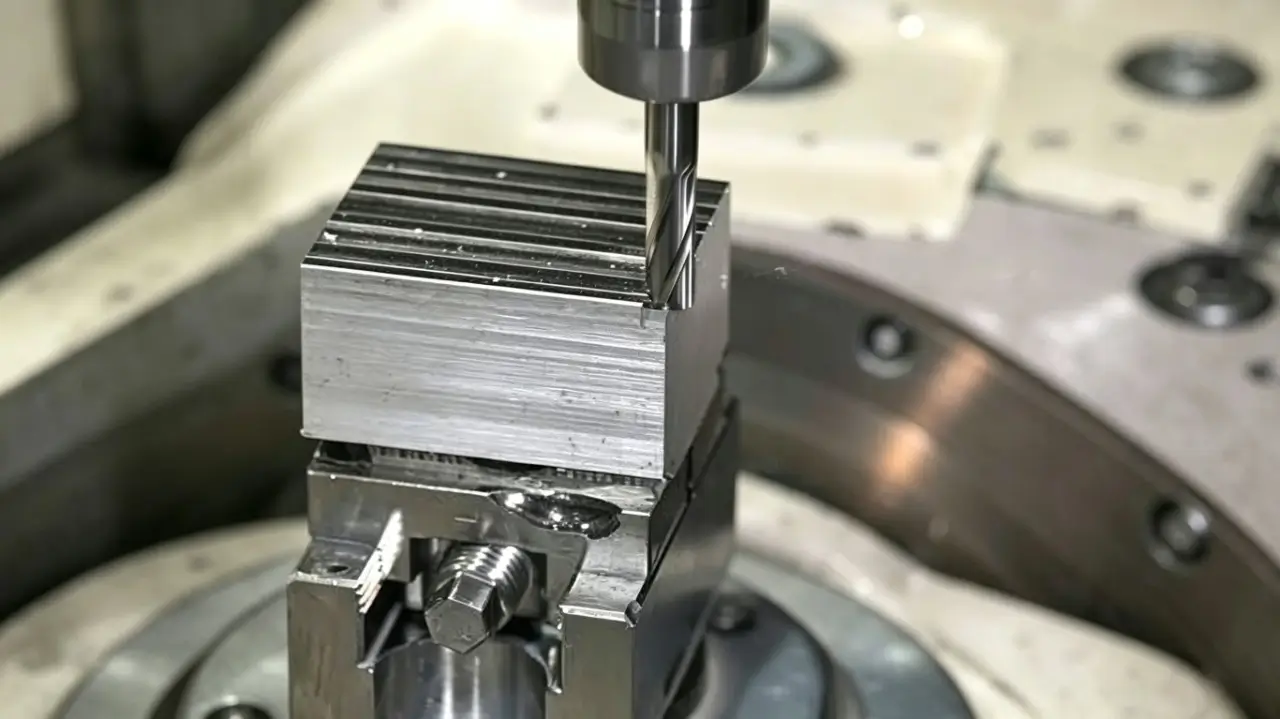
3-axis and 4-axis CNC milling is the most common process for 6061-T6, used to produce flat brackets, panels, housings and structural components with complex 2.5D or 3D geometries. The alloy’s good chip-breaking behavior and low tool wear allow high-speed milling strategies, delivering smooth surface finishes and sharp edge definition. For deep pockets and thin-wall features, 6061-T6’s moderate rigidity minimizes deflection, making it well-suited for electronic enclosures and heat sink parts.
CNC Turning
For round, rotational parts such as shafts, pins, bushings and threaded fasteners, CNC turning delivers high efficiency and tight concentricity with 6061-T6 bar stock. The alloy machines cleanly on lathes with minimal built-up edge, supporting fine surface finishes on external and internal diameters. Its consistent hardness also ensures uniform thread quality during single-point threading operations.
Drilling, Tapping and Secondary Machining
6061-T6 performs reliably across standard secondary operations including precision drilling, countersinking, reaming and tapping. It forms clean, burr-free holes and produces consistent thread profiles with standard tap tooling, reducing the risk of thread galling common with softer aluminum grades. This reliability is particularly valuable for high-volume production runs where process stability directly impacts scrap rates and assembly yield.
Multi-Axis CNC Machining
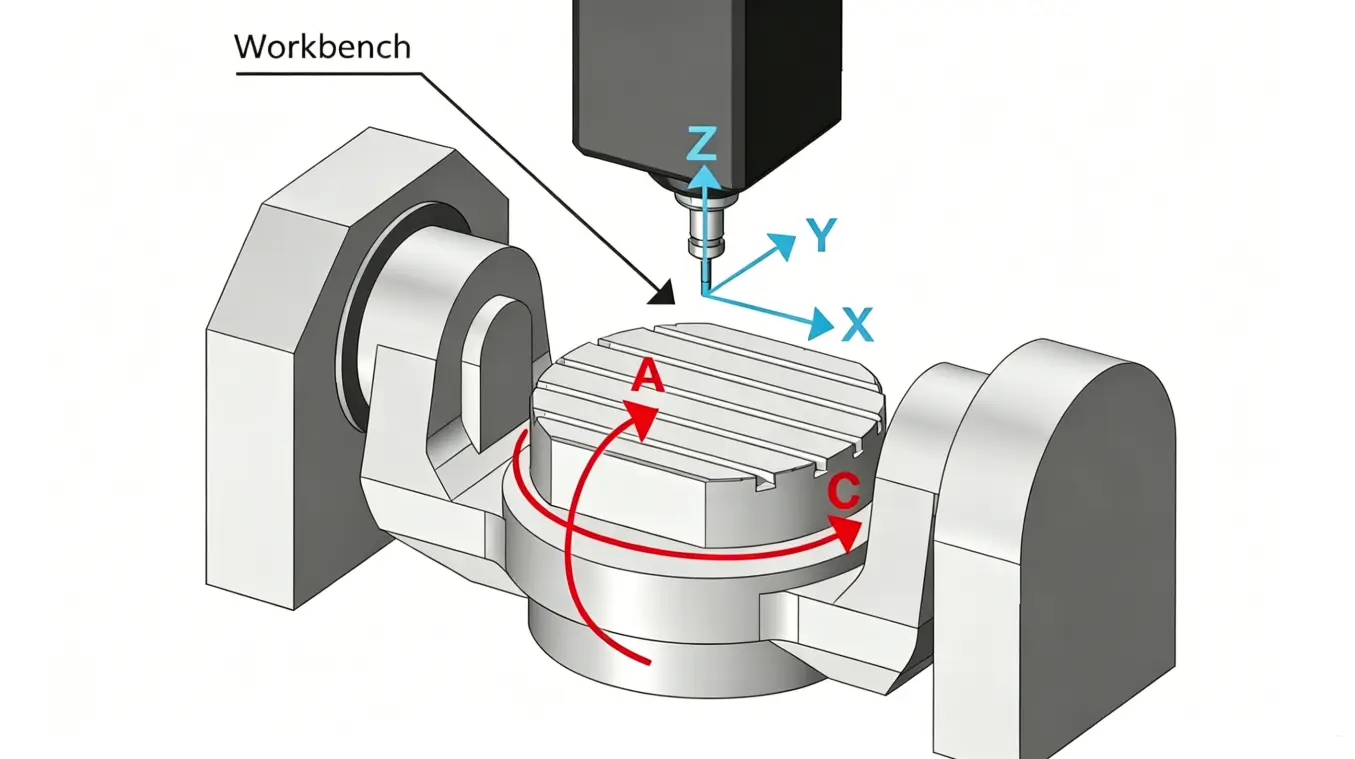
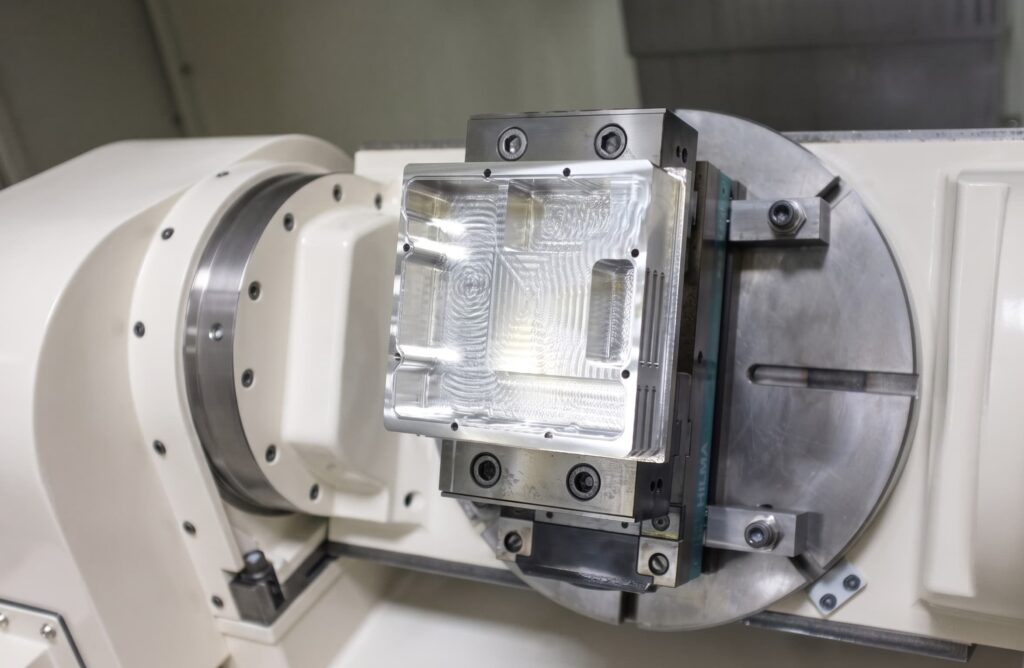
For complex, contoured components such as aerospace brackets, optical mounts and automotive performance parts, 5-axis CNC machining can produce 6061-T6 parts in a single setup. The alloy’s dimensional stability minimizes positional shift between operations, enabling accurate interpolation of angled surfaces and compound features. This reduces fixturing costs and lead times compared with multi-operation setups on conventional 3-axis machines.
Available Surface Finishes for 6061-T6 CNC Parts
6061-T6 aluminum is highly compatible with all standard industrial surface finishing processes, allowing engineers to tailor corrosion resistance, wear performance, appearance and electrical properties to specific application requirements. Finishing options span from low-cost as-machined baseline to high-performance functional coatings, giving procurement teams clear cost-performance tradeoffs for every project.
As-Machined
The default finish for CNC machined 6061-T6 parts, with a typical surface roughness of Ra 1.6–3.2 μm. It retains visible tool marks but requires no secondary processing, making it the most cost-effective option. This finish is standard for internal structural components, brackets and assemblies where cosmetic appearance is not a requirement.
Bead Blasting
Bead blasting produces a uniform, matte silver finish by removing tool marks and surface imperfections with fine glass media. It creates a consistent, non-reflective surface ideal for visible enclosures, panels and consumer-facing components, and also improves adhesion for subsequent coating processes.
Anodizing
6061-T6 forms a uniform, durable oxide layer during anodizing, making it one of the best-performing aluminum alloys for this process. Type II standard anodizing provides enhanced corrosion resistance and can be dyed in a range of colors; Type III hard anodizing delivers a much thicker, abrasion-resistant coating suitable for wear-prone mechanical components.
Brushing and Polishing
Mechanical brushing creates a fine linear grain pattern for a clean, industrial aesthetic, while polishing delivers a smooth, reflective surface. Both are commonly used for externally visible 6061-T6 parts such as equipment panels, mounting brackets and optical hardware.
Tolerance Standards & DFM Guidelines
Proper Aluminum CNC Machining DFM (Design for Manufacturability) optimization is critical for 6061-T6 CNC parts to balance dimensional accuracy, machining cost and lead time. Adhering to standard machining guidelines avoids unnecessary process complexity, reduces scrap rates and ensures consistent batch quality, delivering tangible value for both design engineers and procurement teams.
Standard Tolerance Capabilities
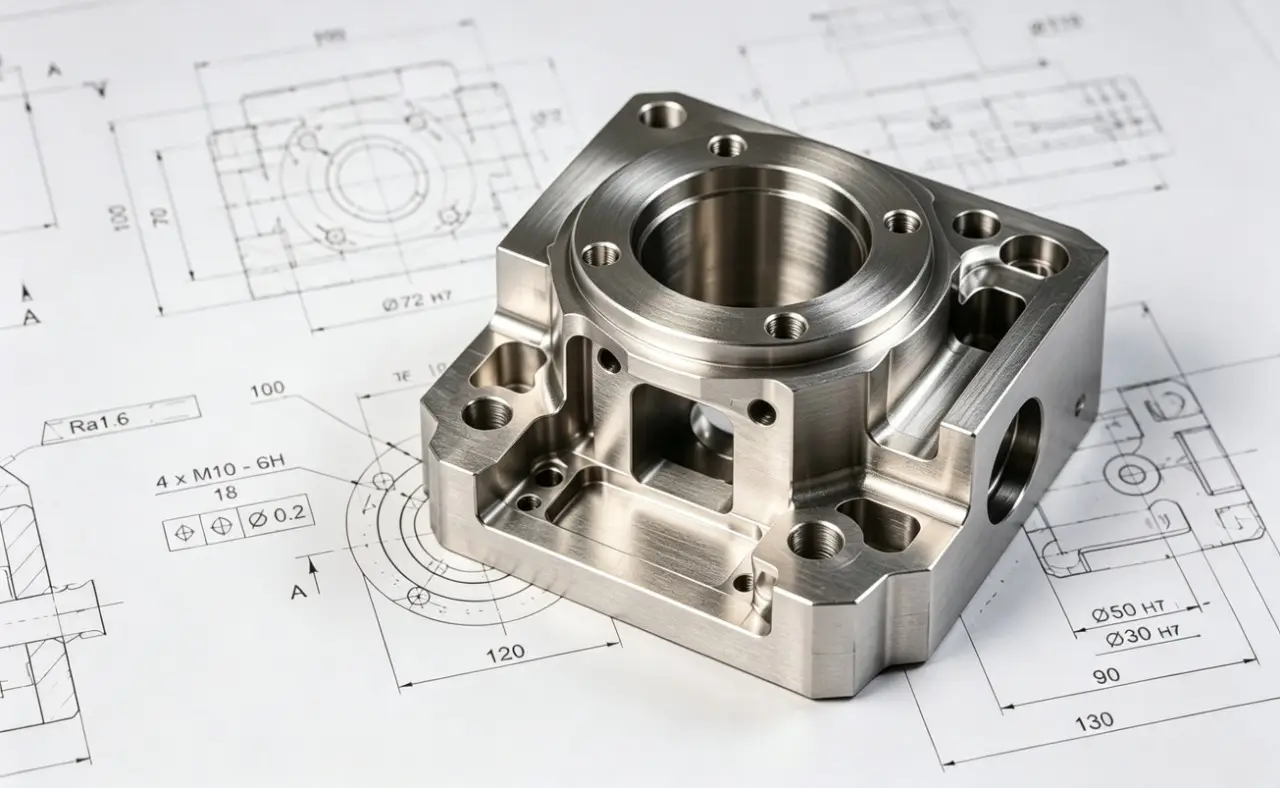
For general machined features on 6061-T6, ISO 2768-m medium tolerance class is the industry standard baseline, delivering reliable and cost-effective accuracy for most industrial applications. Critical features can be held to tighter IT7–IT9 precision tolerances with refined tooling and proper fixturing. Note that excessively tight tolerances require additional finishing passes and inspection steps, which increase per-part cost and extend production time, so tolerance allocation should be matched to actual functional requirements.
Wall Thickness Recommendations
6061-T6’s moderate rigidity supports relatively thin wall designs compared to softer aluminum grades. For most structural parts, a minimum wall thickness of 1.5–2.0 mm is recommended to maintain dimensional stability during clamping and cutting. Larger, taller wall features should be thickened slightly to avoid deflection and post-machining warpage. Designs with extremely thin walls below 1.0 mm are possible but require specialized fixturing and lighter cut parameters, which will add production cost.
Corner Radii and Pocket Design
Internal sharp corners are not achievable with standard CNC milling tools and should be replaced with appropriate corner radii. A minimum radius of R0.5 mm is recommended for most pockets, and using larger radii (R1.0 mm or above) allows higher feed rates, reduces tool wear and eliminates stress concentration points. For deep pockets and slots, maintain a reasonable depth-to-width ratio (ideally under 4:1) to ensure proper chip evacuation and avoid tool deflection that compromises dimensional accuracy.
Thread and Insert Design
6061-T6 supports clean, consistent thread formation via tapping or thread milling across common metric and imperial sizes. For threads M3 and larger, direct tapping yields reliable thread strength for standard assembly use. For parts that will see repeated assembly and disassembly, or for high-load threaded connections, installing threaded inserts (helical coils or press-fit inserts) is recommended to prevent thread wear and stripping, extending the service life of finished components.
Typical Industrial Applications
6061-T6 aluminum’s balanced combination of strength, machinability, corrosion resistance and cost-effectiveness makes it a staple material across a wide range of industrial sectors. It is specified for both critical structural components and general-purpose hardware, with proven performance in demanding operating environments.
Aerospace & Aviation
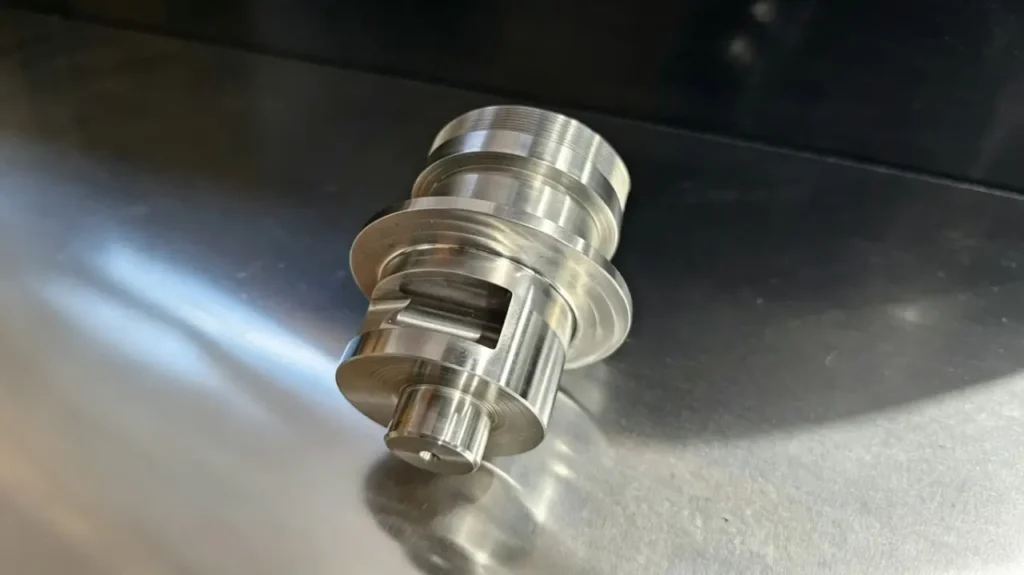
6061-T6 is widely used in aerospace for secondary structural components, mounting brackets, equipment racks and interior fittings, with aerospace-grade stock meeting AMS 4027 material specifications. Its high strength-to-weight ratio supports aircraft weight reduction targets, while its consistent machinability enables tight-tolerance features required for aerostructure assembly. For non-critical airframe and cabin systems, it delivers reliable performance at a lower material and machining cost than higher-grade aerospace alloys.
Automotive & Electric Vehicles
In the automotive industry, 6061-T6 is the go-to alloy for chassis brackets, suspension components, battery tray structures and thermal management parts for electric vehicles. Its good thermal conductivity supports efficient heat dissipation in battery and motor systems, while its structural rigidity handles dynamic vehicle loads. The alloy’s high-volume production compatibility and stable supply chain also make it well suited for mass-produced automotive programs.
Electronics & Telecommunications
6061-T6 is commonly machined into electronic enclosures, RF shielding housings, heat sinks and communication equipment chassis. Its excellent dimensional stability supports tight mating tolerances for sealed enclosure designs, and it responds predictably to anodizing and chromate conversion coatings for electrical insulation and corrosion protection. Good thermal conductivity also makes it a cost-effective choice for passive heat dissipation components.
Industrial Automation & Robotics
For automation equipment and robotic systems, 6061-T6 is used for machine frames, end-of-arm tooling, linear motion components and fixture bases. It maintains geometric accuracy under repeated cyclic loads and long-term operation, minimizing alignment drift on precision production lines. Its uniform machining performance also supports consistent, repeatable production of spare parts and custom automation fixtures.
Optical & Precision Instrumentation
Optical mounts, lens housings, laser system components and testing instrument panels frequently use 6061-T6 aluminum. The alloy’s low post-machining distortion ensures stable positional accuracy for optical alignment, while bead blasted or anodized finishes provide uniform, non-reflective surfaces ideal for optical environments. It can also be machined to very fine feature tolerances for precision metrology equipment.
6061-T6 vs. Other Aluminum Grades
Selecting the optimal aluminum alloy for CNC machining requires balancing structural requirements, manufacturing efficiency, corrosion performance and total project cost. Below is a practical comparison of 6061-T6 with the most widely specified alternative grades, to support engineering material validation and procurement cost-benefit assessment.
6061-T6 vs 6063 Aluminum
6063 is a softer, extrusion-oriented alloy with excellent decorative anodizing response, but significantly lower tensile and yield strength than 6061-T6. It performs poorly in high-speed CNC machining due to a high tendency for built-up edge and stringy chip formation, and cannot reliably hold tight tolerances on thin-walled or load-bearing features. 6061-T6 is the clear preference for precision machined structural components, while 6063 is better suited to simple extruded profiles and cosmetic parts with minimal machining requirements.
6061-T6 vs 7075-T6 Aluminum
7075-T6 is a high-strength aerospace grade with roughly 40% higher tensile strength than 6061-T6, designed for heavily loaded structural components. This performance comes with distinct tradeoffs: higher raw material cost, accelerated cutting tool wear, weaker general corrosion resistance and greater risk of post-machining distortion. For most general industrial, automotive and electronic applications, 6061-T6 delivers sufficient mechanical performance at substantially lower production cost with more consistent batch-to-batch manufacturability.
6061-T6 vs 5052 Aluminum
5052 is a non-heat-treatable alloy recognized for superior corrosion resistance and weldability, most commonly used in sheet metal fabrication. Its lower yield strength and higher ductility cause greater material deflection during CNC cutting, making it difficult to maintain tight precision tolerances on machined features. 6061-T6 offers far better dimensional stability and machinability for milled and turned components, while 5052 remains the preferred choice for welded assemblies and parts operating in harsh, corrosive outdoor environments.
Conclusion
6061-T6 aluminum is the benchmark general-purpose alloy for precision CNC machining, delivering an unmatched balance of structural performance, manufacturing efficiency and total cost value across prototype and production volumes.
For design engineers, it offers predictable mechanical properties, reliable tolerance consistency and broad finishing compatibility to streamline design iteration. For procurement teams, its global availability, stable pricing and low scrap rates ensure consistent cost control and dependable lead times for custom and ongoing production projects.
While higher-strength grades like 7075-T6 suit extreme load-bearing applications, 6061-T6 covers the vast majority of industrial, automotive and electronic use cases, making it the lowest-risk, highest-value material choice for most custom component projects.
FAQ
A: Prototype quantities with as-machined finish typically ship within 3–7 business days. Production batches of 100+ parts generally require 10–15 business days. Adding secondary finishes such as anodizing or powder coating, or specifying tight precision tolerances, will add 2–5 days depending on process scope.
A: 6061-T6 covers most moderate structural requirements with its 276 MPa yield strength, making it appropriate for industrial equipment frames, automotive brackets and secondary aerospace structures. For primary high-load components requiring maximum strength, 7075-T6 is the typical upgrade, though it carries higher material and machining costs.
A: For standard production and load-bearing features, 1.5 mm is the recommended minimum wall thickness to avoid cutting deflection and dimensional drift. With specialized fixturing and light finishing passes, non-load-bearing features as thin as 0.8 mm can be produced. Structural load-bearing walls should be designed to at least 2.0 mm for reliable long-term performance.
A: T651 is a premium T6 variant that adds a controlled 1–3% permanent stretching step after quenching. This process relieves internal residual stress more uniformly, further minimizing post-machining distortion on large, thick cross-sections. For most standard CNC components, T6 delivers sufficient stability; T651 is preferred for large precision plates and high-stability aerospace structural parts.