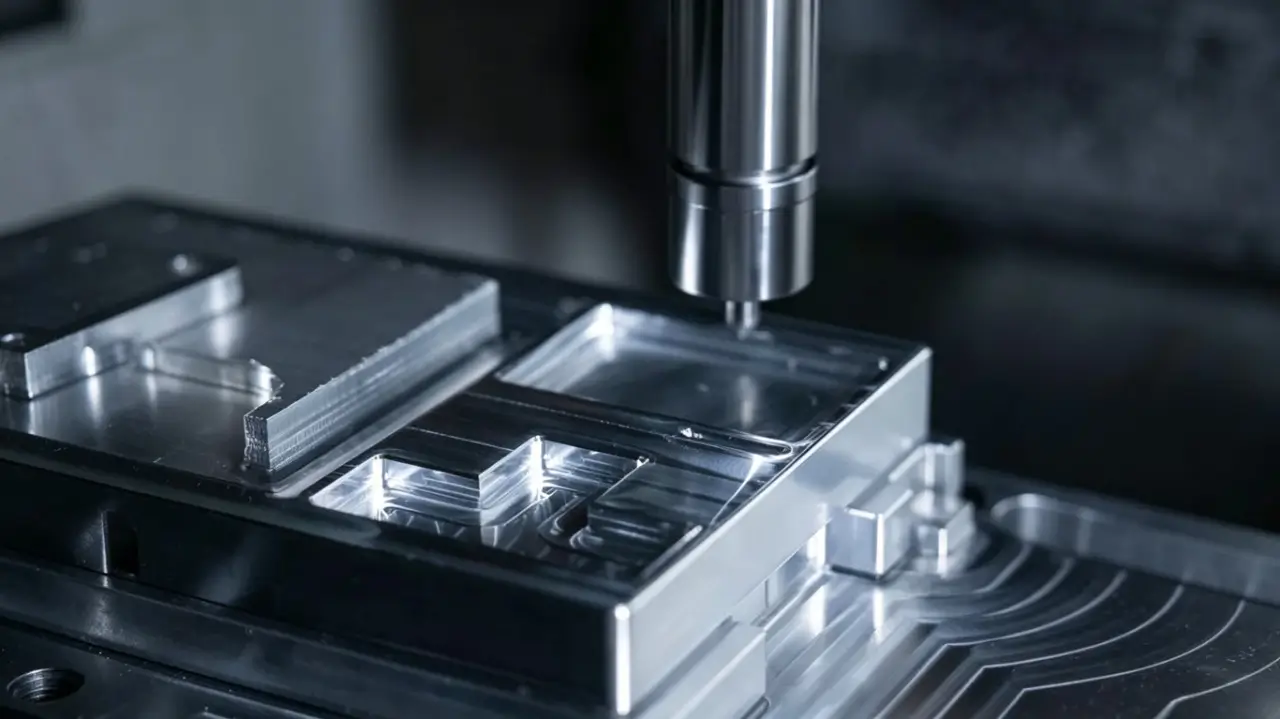

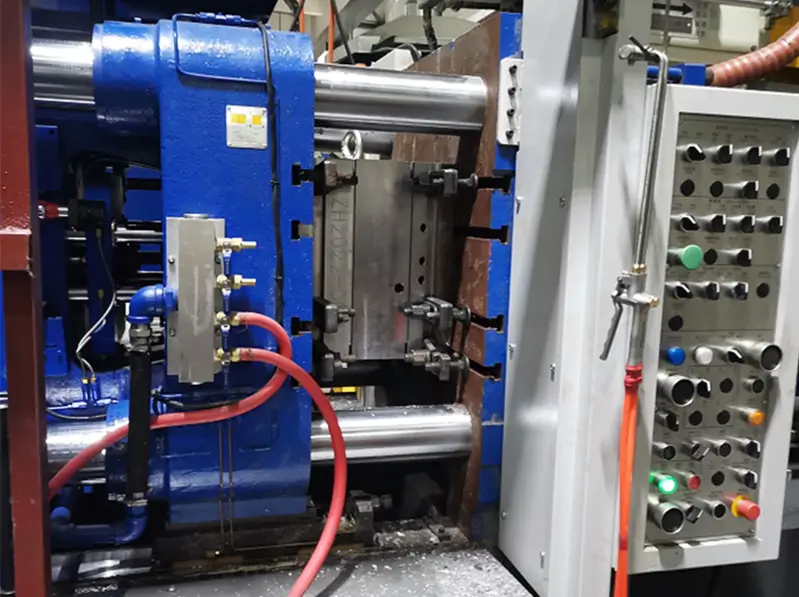
What is High Pressure Die Casting?
High Pressure Die Casting (HPDC) is a manufacturing process where molten metal is injected into a steel mold under high pressure to produce precise, complex metal parts. The metal solidifies quickly in the mold and is ejected for the next cycle, allowing tight tolerances, excellent surface finish, and efficient production. HPDC is widely used for prototypes and large-scale production in industries such as automotive, aerospace, electronics, and medical devices.
Evolution History of HPDC
High Pressure Die Casting (HPDC) originated in the mid-19th century, initially used for small metal components in printing and typecasting. Over time, advances in steel molds and high-pressure injection enabled HPDC to expand into automotive, aerospace, and electronics industries, allowing the production of complex, high-precision parts. Modern HPDC now supports thin-wall designs, multiple alloys such as aluminum, zinc, and magnesium, and both prototype and large-scale production, making it a critical process in today’s industrial manufacturing.
How High Pressure Die Casting Works
High Pressure Die Casting (HPDC) is a precision metal casting process widely used for manufacturing complex aluminum, zinc, and magnesium parts with superior dimensional accuracy, surface finish, and mechanical properties. Each stage of HPDC is tightly controlled, directly affecting part quality, consistency, and material efficiency.
Mold Preparation and Thermal Management
Before each casting cycle, the die is thoroughly cleaned and coated with a release agent to prevent adhesion and reduce wear. Proper thermal management is critical—dies are preheated to an optimal working temperature to ensure consistent metal flow and avoid premature solidification. Venting channels and overflow wells are inspected to guarantee that trapped gases can escape during injection. Proper die preparation is essential for consistent high-pressure die casting results, minimizing porosity and extending die life.
Metal Injection and Process Control
Molten metal is carefully transferred from the furnace to the die cavity using specialized high-pressure die casting machines. Proper control during this stage is critical for achieving high dimensional accuracy, minimizing porosity, and ensuring consistent part quality.
Hot Chamber Die Casting Machines
Hot chamber die casting machines are designed for low-melting-point alloys such as zinc and magnesium. In this configuration, the injection system is integrated into the molten metal pot, enabling rapid injection cycles and high productivity. Hot chamber machines are particularly suitable for producing small to medium-sized components in high volumes, where speed and efficiency are essential, and the machine can withstand continuous exposure to the molten alloy.
Cold Chamber Die Casting Machines
Cold chamber die casting machines are used for high-melting-point alloys, most commonly aluminum. In each cycle, molten metal is ladled into the injection chamber to protect machine components from thermal damage. This configuration allows precise control of injection speed, pressure, and metal temperature, making it ideal for larger or more complex parts that require tight tolerances, excellent surface finish, and minimal defects.
Cooling and Solidification
After the molten metal fills the mold, it rapidly cools and solidifies under high pressure, ensuring tight tolerances, minimal shrinkage, and a fine-grained, dense microstructure. The die’s internal cooling channels control heat removal, while holding pressure compensates for shrinkage, reducing defects such as porosity or warping. Modern HPDC often uses simulation tools to optimize cooling and solidification for consistent part quality.
Ejection and Part Removal
Once the metal has solidified, the die opens and ejector pins or mechanical systems remove the part without damaging its surfaces. Proper ejection ensures dimensional accuracy and prevents deformation, while the die immediately closes for the next cycle, supporting high-throughput production. This step is crucial for maintaining consistent quality, especially for complex or thin-walled HPDC components.
Trimming
After ejection, excess material such as flash along parting lines is removed using trimming presses or cutting tools. Proper trimming ensures the part’s final dimensions are accurate and prevents interference in assembly, while recyclable scrap is collected for reuse to improve material efficiency.
High Pressure Die Casting vs. Low Pressure and Gravity Die Casting
High Pressure Die Casting (HPDC) differs significantly from low-pressure and gravity die casting in process, part quality, production efficiency, and applications. The following table highlights the key distinctions:
| Feature | High Pressure Die Casting (HPDC) | Low Pressure / Gravity Die Casting |
| Injection Method & Pressure | Molten metal forced into die at 1,500–20,000 psi (10–140 MPa) | Low-pressure: 15–150 psi; Gravity: only gravity |
| Wall Thickness & Complexity | Thin-walled, intricate geometries | Thicker walls, simpler shapes |
| Dimensional Accuracy & Surface Finish | Very high accuracy, smooth surface, minimal post-machining | Moderate accuracy, rougher surfaces, more secondary machining needed |
| Production Volume & Efficiency | Optimized for high-volume, rapid cycle times, automated | Medium-volume, slower cycle times, more manual intervention |
| Material Utilization | Excess runners/flash can be remelted efficiently | Less scrap in runners, but more porosity/shrinkage in large parts |
| Typical Applications | Automotive, electronics, consumer products, precision components | Large structural parts, industrial machinery, heavy components |
Metal Materials Used in High Pressure Die Casting
Choosing the right material is critical to achieving the desired mechanical properties, surface finish, and long-term performance of HPDC parts. The selection process depends on alloy properties, part geometry, and end-use requirements. Optimizing both material choice and process parameters ensures durable, defect-free castings suitable for demanding applications.
Aluminum Alloys
Aluminum is widely used in HPDC for its lightweight strength, corrosion resistance, and thermal stability. It is ideal for automotive components, housings, and structural parts where weight reduction is critical. Proper thermal management and gating design are essential to ensure complete filling, minimize porosity, and maintain tight tolerances.
Zinc Alloys
Zinc alloys offer excellent dimensional stability and high fluidity, making them suitable for intricate designs and thin-walled parts. Zinc’s low melting point allows faster cycle times and reduces thermal stress on dies, improving production efficiency. It is commonly used in electronics housings, small mechanical components, and precision fittings.
Magnesium Alloys
Magnesium combines very low density with good thermal conductivity and adequate mechanical strength. It is often selected for lightweight structural applications and electronics components. Careful control of injection pressure, cooling rate, and die temperature is crucial to prevent porosity and ensure a dense, high-quality microstructure.
Advantages of High Pressure Die Casting
High Pressure Die Casting (HPDC) is a highly efficient and precise manufacturing process that offers significant benefits for producing complex metal components. Its combination of speed, accuracy, and material efficiency makes it ideal for automotive, electronics, aerospace, and industrial applications.
Dimensional Accuracy and Surface Quality
One of the primary advantages of HPDC is its ability to produce parts with exceptional dimensional accuracy and smooth surface finishes. The high-pressure injection ensures that molten metal fills even intricate cavities completely, minimizing porosity and surface defects. This precision reduces or eliminates the need for extensive post-machining, allowing manufacturers to deliver components that meet tight tolerances and functional requirements right out of the die.
Lightweight and Thin-Walled Design
HPDC allows the production of thin-walled and lightweight components without compromising strength or integrity. This capability is critical in industries like automotive and aerospace, where reducing weight improves fuel efficiency and overall performance. By optimizing die design, metal flow, and cooling rates, manufacturers can achieve complex geometries while maintaining structural durability.
High Production Efficiency
The process is designed for high-volume production with rapid cycle times. Automated die operations, combined with the use of hot or cold chamber machines depending on the alloy, enable continuous production with minimal downtime. High-pressure injection and controlled solidification allow for consistent, repeatable parts, making HPDC ideal for mass production of precision components.
Material Efficiency and Cost Savings
HPDC is also highly material-efficient. Excess runners, overflows, and flash are clean scrap that can be collected, remelted, and reused, reducing waste and lowering production costs. In addition, the combination of high yield, minimal secondary machining, and reduced scrap makes HPDC a cost-effective solution for producing high-performance metal parts.
Tooling Durability and Long Service Life
HPDC tooling is designed for extended production runs, with modern die steels and advanced thermal management enabling molds to withstand hundreds of thousands to over one million cycles. This exceptional die life, combined with regular maintenance and optimized cooling channel design, ensures consistent part quality over the entire production lifecycle. The long service life of HPDC tooling significantly reduces per-part tooling costs, making the process economically viable for mass production.
Applications of High Pressure Die Casting Across Industries
High Pressure Die Casting (HPDC) is widely adopted across industries that demand precision, strength, and efficiency in metal components. Its ability to produce complex geometries, thin-walled structures, and consistent high-volume parts makes it ideal for a variety of applications.
Automotive Industry
HPDC plays a crucial role in the automotive sector, producing engine brackets, transmission housings, gear components, and structural parts. The process allows for lightweight yet durable designs, helping manufacturers reduce vehicle weight and improve fuel efficiency without compromising strength. Tight tolerances and excellent surface finish ensure that parts fit precisely and perform reliably under high mechanical stress, making HPDC an essential technology for modern automotive manufacturing.
Electronics Industry
In electronics, HPDC is widely used for producing housings, connectors, heat sinks, and small precision components. The process enables intricate designs with fine details and thin walls, while maintaining dimensional accuracy and smooth surfaces. HPDC parts meet the high standards required for electronic assemblies, ensuring proper fit, thermal management, and durability in devices ranging from consumer electronics to industrial control systems.
Communications Industry
In the communications industry, HPDC is widely used for producing housings, brackets, connectors, and precision components for devices such as routers, base stations, antennas, and telecom enclosures. The process allows complex geometries, fine details, and thin-wall structures while maintaining high dimensional accuracy and smooth surface finishes. HPDC parts ensure reliable assembly, effective thermal management, and long-term durability, meeting the stringent requirements of modern communication systems and network infrastructure.
Industrial Machinery
HPDC provides high-quality components for industrial machinery, including pumps, valves, gear housings, and precision equipment. The ability to produce complex geometries with high dimensional accuracy allows manufacturers to assemble machinery with reliable performance and minimal post-processing. High production efficiency and material yield make HPDC ideal for producing durable, cost-effective components for heavy-duty industrial applications.
Future Trends and Innovations in High Pressure Die Casting
High Pressure Die Casting continues to evolve with advancements in materials, equipment, and process technology. Emerging trends focus on lightweighting, improved energy efficiency, and integration of digital manufacturing. For instance, new aluminum and magnesium alloys with higher strength-to-weight ratios allow for lighter components without compromising structural integrity.
Automation and smart manufacturing technologies, including real-time process monitoring, predictive maintenance, and AI-driven quality control, are enhancing production efficiency and consistency. The adoption of additive manufacturing for tooling and mold inserts is also gaining traction, enabling faster prototyping, more complex geometries, and shorter lead times.
Sustainability is another key trend, with HPDC manufacturers optimizing material reuse, energy consumption, and waste reduction throughout the casting process. These innovations not only improve part quality and production efficiency but also align HPDC with global environmental and regulatory requirements. By embracing these technological developments, manufacturers can stay competitive and meet the growing demands of automotive, aerospace, electronics, and industrial machinery sectors.
Custom High Pressure Die Casting Services at ZH Precision
ZH Precision provides custom High Pressure Die Casting services for precision metal components. Our capabilities include die casting mold development, aluminum, zinc, and magnesium die casting, as well as secondary operations such as CNC machining and surface finishing.
Equipped with die casting machines ranging from 88 to 2000 tons, and supported by certified quality systems including ISO 9001:2015 and IATF 16949:2016, we deliver reliable and scalable production for industries such as automotive, electronics, and industrial machinery.
Conclusion
High Pressure Die Casting (HPDC) is a highly efficient manufacturing process capable of producing complex metal components with excellent dimensional accuracy, smooth surface finish, and consistent quality. By combining high-pressure metal injection, optimized mold design, and rapid solidification, HPDC enables the mass production of lightweight and durable parts used in industries such as automotive, electronics, aerospace, and industrial machinery. With its advantages in production efficiency, tooling durability, and design flexibility, HPDC remains one of the most important metal casting technologies for modern high-volume manufacturing.
FAQ
A:High Pressure Die Casting is most commonly used with non-ferrous alloys such as aluminum, zinc, and magnesium. These metals offer excellent fluidity, allowing them to fill complex mold cavities under high pressure while maintaining good mechanical properties and dimensional stability. Aluminum alloys are widely used for lightweight structural components, while zinc alloys are preferred for small precision parts with fine details.
A:HPDC is best suited for medium to high-volume production due to the initial tooling investment required for die casting molds. Once the mold is produced, the process enables extremely fast cycle times and consistent repeatability, making it highly cost-effective for large production runs in industries such as automotive, electronics, and consumer products.
A:HPDC can achieve tight dimensional tolerances and excellent surface finish, often reducing the need for extensive post-machining. Typical tolerances depend on part size and geometry, but many components can achieve tolerances within ±0.1 mm to ±0.25 mm. For critical features or precision interfaces, secondary CNC machining is commonly applied.
A:While HPDC offers high precision and efficiency, it is generally limited to non-ferrous metals and requires significant upfront tooling investment. Additionally, extremely thick sections may lead to shrinkage defects, and very large components may be better suited to alternative casting methods such as low-pressure or gravity die casting.
A:Quality in HPDC production is ensured through process control, mold design optimization, and rigorous inspection procedures. Manufacturers typically implement real-time monitoring of injection parameters, controlled cooling systems, and strict quality management systems such as ISO 9001 and IATF 16949 to maintain consistent part performance and dimensional accuracy.